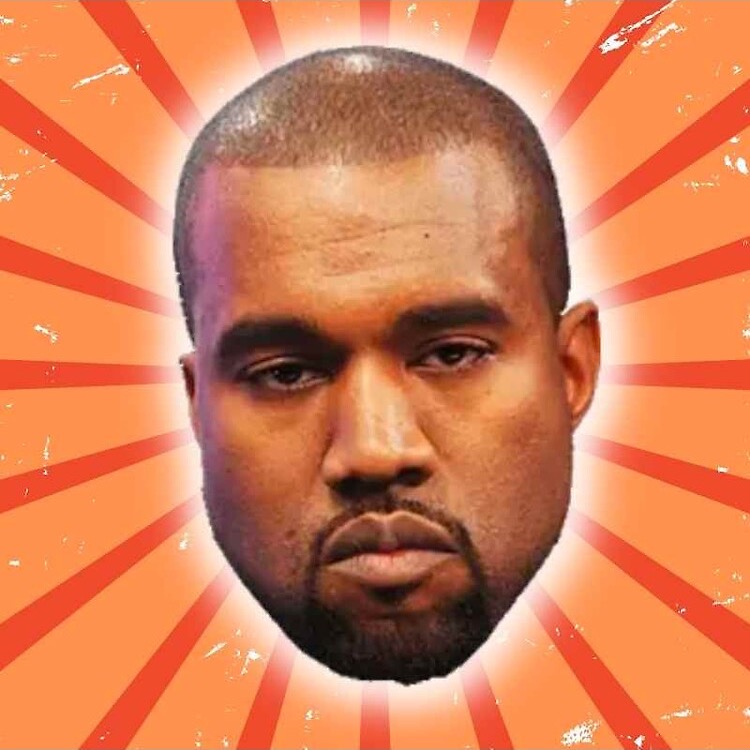
Kanye West's life story spans five decades, fourteen studio albums, countless controversies, and a cultural footprint that extends far beyond music. From his birth in Atlanta in 1977 to the release of BULLY in 2026, every chapter has been defined by reinvention — artistic, personal, and public. Here is the complete timeline, organized by era.
Early Life and Chicago Roots (1977-1997)
Kanye Omari West was born on June 8, 1977, in Atlanta, Georgia, to Ray West — a former Black Panther who later became a photographer and pastoral counselor — and Donda West, an English professor who would become the most important person in his life. When his parents divorced in 1980, three-year-old Kanye moved with his mother to the South Side of Chicago, the city that would shape his entire artistic identity.
In 1987, Donda accepted a teaching position at Nanjing University, taking ten-year-old Kanye to China for a year. The experience of being a cultural outsider sharpened his sense of identity and difference — themes that would surface repeatedly in his music. Back in Chicago, he attended Polaris High School in Oak Lawn, where he began rapping at age 15 and sold his first beat for $175 to a local rapper.
Kanye briefly attended the American Academy of Art and then Chicago State University, where his mother taught. In 1997, at age 20, he dropped out to pursue music full-time — a decision that would become the central autobiographical theme of his debut album. Donda, the English professor, initially struggled to accept her son leaving college. The tension between academic expectations and artistic ambition defined Kanye's early narrative.
The Come-Up: Producer to Rapper (1998-2004)
Through the late 1990s, Kanye built a reputation as a producer in Chicago's underground scene, mentored by No I.D. (Dion Wilson), the veteran beatmaker best known for developing Common. His signature technique — pitching up soul vocals to chipmunk speeds — emerged during this period. In 2000, he moved to New York City to pursue bigger opportunities.
The breakthrough came in 2001 when Kanye produced "This Can't Be Life" for Jay-Z's The Dynasty: Roc La Familia. More Jay-Z productions followed, and by 2002, Kanye had become Roc-A-Fella Records' in-house producer, crafting multiple tracks on Jay-Z's The Blueprint, including the album-defining "Izzo (H.O.V.A.)" His production on Talib Kweli and Common records further established his credentials.
But Kanye wanted to rap, and Roc-A-Fella's executives were skeptical. In October 2002, a near-fatal car accident shattered his jaw. He recorded "Through the Wire" — rapping through his wired-shut jaw over a sped-up Chaka Khan sample — turning trauma into the song that proved he was a viable MC. The College Dropout was released on February 10, 2004, debuting at number two on the Billboard 200. It sold 441,000 copies in its first week and won the Grammy for Best Rap Album, launching one of the most consequential careers in music history.
The Rise: Cultural Force (2005-2010)
Late Registration followed in August 2005, expanding the chipmunk-soul formula with orchestral arrangements by film composer Jon Brion. "Gold Digger" featuring Jamie Foxx became Kanye's biggest commercial hit, spending ten weeks at number one. The album debuted at number one and won Best Rap Album at the Grammys.
In September 2005, during a live Hurricane Katrina telethon, Kanye departed from the teleprompter to say "George Bush doesn't care about Black people" — a moment that became one of the most famous live-television incidents of the decade and permanently altered his public image from hitmaking producer to political lightning rod.
Graduation (September 2007) pivoted toward electronic music and stadium rock, famously outselling 50 Cent's Curtis in a sales battle that symbolized hip-hop's shifting direction away from gangsta rap. "Stronger," sampling Daft Punk, became a global anthem. But two months later, on November 10, 2007, Donda West died from complications following cosmetic surgery. Her death devastated Kanye and redirected the course of his music permanently.
808s & Heartbreak (November 2008) was the direct consequence — an album of Auto-Tuned vocals and sparse 808 drum machines, recorded in the aftermath of his mother's death and a broken engagement with designer Alexis Phifer. Critics were divided, but the album's influence on Drake, Kid Cudi, and an entire generation of melodic rap is now considered foundational.
My Beautiful Dark Twisted Fantasy (November 2010) was the redemption album — recorded in a self-imposed creative exile in Hawaii after the infamous 2009 VMAs incident, where Kanye interrupted Taylor Swift's acceptance speech. MBDTF arrived as a maximalist masterpiece: King Crimson samples, Bon Iver features, orchestral arrangements, and a cast of dozens. It is widely considered one of the greatest albums ever recorded and reclaimed Kanye's critical standing after the VMAs fallout.
The Provocateur Era (2011-2016)
Watch the Throne (2011) with Jay-Z was a victory lap — two rap billionaires celebrating excess over luxury production. "Otis" sampled Otis Redding; "N****s in Paris" became an inescapable club anthem. The supporting tour was one of the highest-grossing of the year.
Yeezus (June 2013) detonated everything Watch the Throne represented. Working with Daft Punk, Hudson Mohawke, and Rick Rubin, Kanye created an album of industrial noise, distorted screams, and deliberate ugliness. It was his most polarizing release and his most influential — its impact on experimental hip-hop is still felt today. That same year, his daughter North was born with Kim Kardashian, and the Yeezus Tour featured a mountain, a glacier, and a Jesus lookalike on stage.
In 2015, Kanye launched Yeezy Season 1 at New York Fashion Week, entering the fashion industry as a designer rather than a celebrity endorser. The Adidas Yeezy sneaker line followed, eventually generating over $1.5 billion in annual revenue and making Kanye a billionaire.
The Life of Pablo (February 2016) was released exclusively on Tidal and then continually updated on streaming platforms — a living album that blurred the line between finished product and work-in-progress. Its chaotic roll-out, multiple title changes (from So Help Me God to SWISH to Waves to TLOP), and post-release revisions defined it as much as the music itself.
Turbulence and Transformation (2017-2021)
The Wyoming era began in 2018 with Kanye retreating to a ranch to record a cluster of albums: ye, Kids See Ghosts (with Kid Cudi), and production work for Pusha T, Teyana Taylor, and Nas — five albums in five weeks. ye was his shortest solo album at seven tracks, directly addressing his bipolar disorder diagnosis. Kids See Ghosts, by contrast, is considered one of his strongest late-career works.
The Yandhi sessions (2018) produced what many fans consider a lost masterpiece — an album that was scrapped and reworked into Jesus Is King (October 2019), Kanye's gospel album recorded with the Sunday Service choir. The pivot from secular to sacred was dramatic and divisive, but Jesus Is King won the Grammy for Best Contemporary Christian Music Album.
DONDA (August 2021) was named after his late mother and preceded by a series of elaborate listening events in Atlanta's Mercedes-Benz Stadium, where Kanye lived for weeks during the album's completion. The 27-track album was dense, atmospheric, and uneven — a sprawling tribute that showcased both Kanye's ambition and his resistance to editing.
The BULLY Era (2022-2026)
The early 2020s brought intense public controversy — from the dissolution of his marriage to Kim Kardashian to the loss of his Adidas partnership in 2022 following a series of antisemitic remarks. The Vultures series with Ty Dolla $ign (2024-2025) represented a creative partnership that pushed into trap and melodic rap territory across two collaborative albums.
BULLY arrived in 2026 as a statement of solo independence. Eighteen tracks, almost entirely self-produced, with a focused roster of features: Travis Scott, CeeLo Green, Don Toliver, Peso Pluma, and André Troutman. The album's disciplined approach — tight production, cohesive sequencing, controlled aggression — marked a return to artistic focus after years of sprawling collaboration.
The Through Line
Across five decades, the constant in Kanye West's story is reinvention. Every era responds to the one before it — maximalism follows minimalism, gospel follows secular, collaboration follows isolation. The controversies are inseparable from the creativity; the personal traumas directly generate the artistic breakthroughs. Whether you trace the line from Donda West's death to 808s & Heartbreak, from the VMAs to MBDTF, or from the Vultures sprawl to BULLY's focus, the pattern is the same: crisis, transformation, creation.
The Ye Universe interactive timeline maps 62 events across these five decades — births and deaths, albums and awards, controversies and comebacks. Every event connects to the music, and the music connects to everything else. The timeline is not just a chronology. It is the architecture of one of the most complex and consequential careers in modern culture.