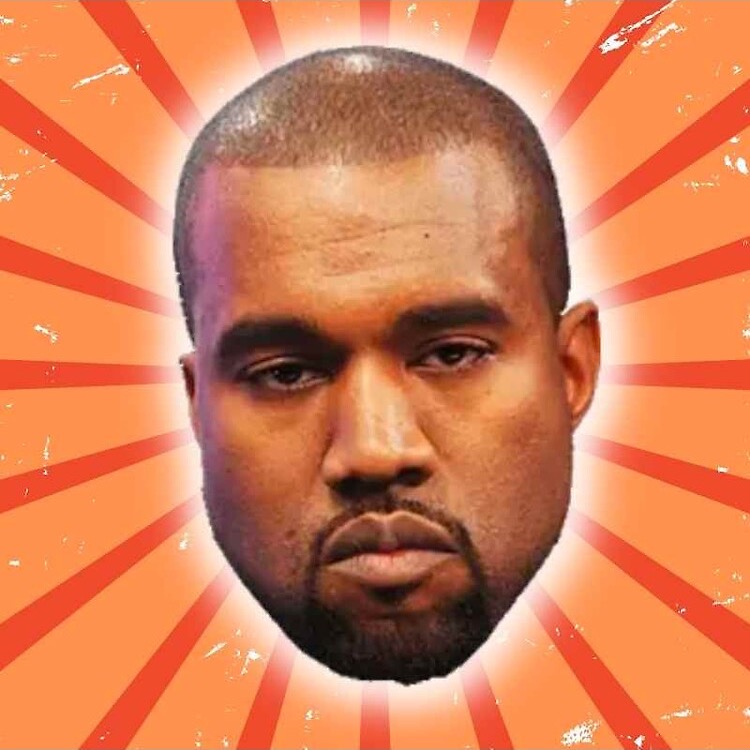
Recorded largely while Kanye recovered from a near-fatal car accident, The College Dropout was a defiant debut that upended hip-hop expectations. Its chipmunk soul production — built on sped-up vocal samples — and earnest, introspective rapping created a new template for the genre. The album debuted at #2 on the Billboard 200 and established Kanye as both a visionary producer and a singular voice in rap.
Deep Dive
Background
Kanye spent years building a reputation as one of hip-hop's most gifted producers while Roc-A-Fella Records repeatedly shelved his ambitions as a rapper, convinced that a preppy, backpack-wearing producer could not sell records as an MC. He recorded much of the album while recovering from a near-fatal 2002 car accident, jaw wired shut, treating physical limitation as creative fuel. The album drew on skits, interludes, and a conceptual thread about institutional education as a trap — a risky structural bet that paid off. Its chipmunk soul sound, built from dramatically sped-up vocal samples, established a sonic signature that felt immediately distinct from the dominant trends of the era.
Themes
The album is fundamentally about the outsider demanding entry on his own terms — the class politics of who gets to be taken seriously, and the psychic cost of chasing validation in a system designed to exclude you. Running beneath the humor and the skits is a genuine engagement with faith, Black working-class aspiration, and the danger of letting ambition hollow out your values.
Production
The signature technique is the chipmunk soul pitch-shift: vocal samples chopped and accelerated to a high, keening register that sits somewhere between joy and desperation. Kanye co-produced most of the album with collaborators including No I.D., who had been his mentor, and the lush, soulful palette — heavy on strings, warm bass, and gospel — set a new standard for melodic hip-hop production.
Legacy
The College Dropout created a template for introspective, sonically adventurous rap that reshaped the mainstream. Its commercial success — two million copies in its first year — proved that hip-hop did not have to choose between artistic ambition and popularity, and its influence can be traced in virtually every subsequent wave of thoughtful rap from Lupe Fiasco to Kendrick Lamar to J. Cole.
Best For
Perfect for anyone who has ever felt underestimated, or wants to understand how one album quietly rewrote the rules of hip-hop.
Fun Fact
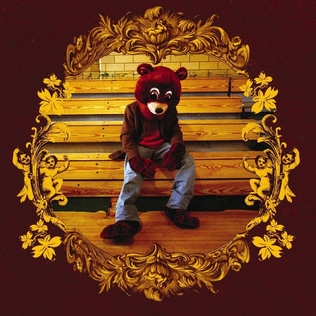
The album's iconic cover art — Kanye in a bear costume, a recurring visual motif on early merchandise and videos — was inspired by a college mascot, chosen specifically to subvert expectations of what a rapper's image should look like.
Tracklist — 16 songs
- 1★Intro
- 2★We Don't Care1 sample
- 3★Graduation Day
- 4★All Falls Down1 sample
- 5★Spaceship1 sample
- 6★Jesus Walks1 sample
- 7★Never Let Me Down1 sample
- 8★Get Em High
- 9★The New Workout Plan
- 10★Slow Jamz1 sample
- 11★Breathe In Breathe Out
- 12★School Spirit (Skit 1 / Skit 2)1 sample
- 13★Two Words
- 14★Through the Wire1 sample
- 15★Family Business
- 16★Last Call1 sample
Producers — 2
Featured Artists — 2
Sample Map — 9 sources
Different Strokes
Syl Johnson · 1967 · Soul
Ex-Factor
Lauryn Hill · 1998 · Neo-Soul/R&B
I Heard It Through the Grapevine
Marvin Gaye · 1968 · Soul/R&B
Walk With Me
ARC Choir · 1982 · Gospel
Godzilla March
Akira Ifukube · 1954 · Soundtrack
Every Little Bit Hurts
Brenda Holloway · 1964 · Soul
Kung Fu Fighting
Carl Douglas · 1974 · Funk/Disco
Through the Fire
Chaka Khan · 1984 · R&B/Soul
Two Thousand Seasons
DJ Premier · 2001 · Hip-Hop
Era — Chipmunk Soul Era (2004–2005)
Defined by Kanye's signature technique of pitching up vintage soul and R&B vocal samples to create an instantly recognizable sound, the Chipmunk Soul era established him as both the foremost producer in hip-hop and an unlikely new voice for its social conscience. The two albums released in this period — both produced with orchestral collaborator Jon Brion on Late Registration — positioned Kanye as the thinking person's alternative to the dominant rap styles of the mid-2000s, blending gospel warmth with sharp class commentary.
Also in this era