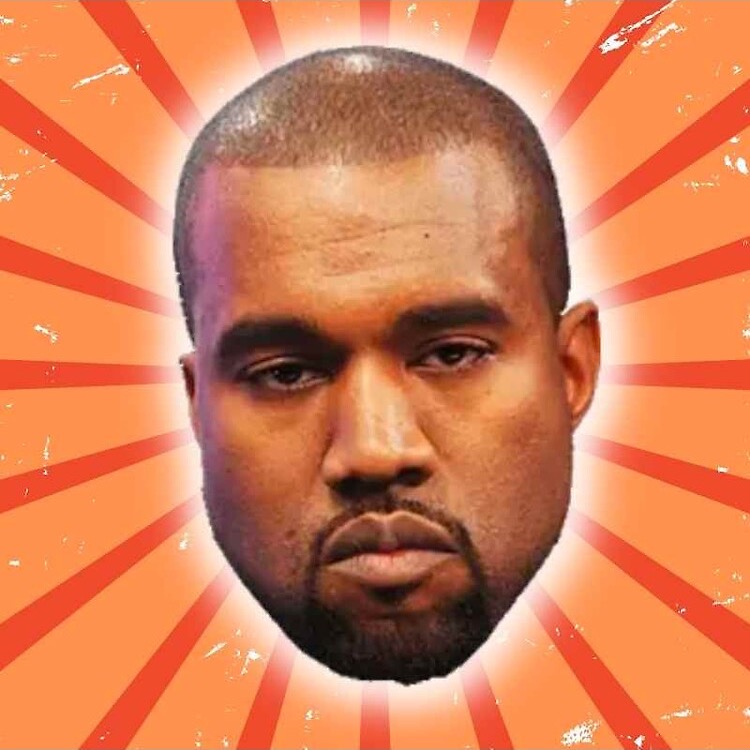
No artist in hip-hop has reinvented their sound as many times as Kanye West. Across fourteen studio albums spanning two decades, he has moved from soul-sampling beatmaker to stadium-rock producer to industrial provocateur to gospel choir conductor — and then kept going. Each era has its own sonic fingerprint, and understanding how those fingerprints evolved is understanding the arc of modern music production.
The Chipmunk Soul Era (2001-2005): College Dropout & Late Registration
Kanye's signature production technique in the early 2000s was sped-up soul samples — taking vocal snippets from artists like Chaka Khan, Curtis Mayfield, and Otis Redding and pitching them up to create high, childlike melodies. "Through the Fire" became "Through the Wire" by speeding up Chaka Khan's original; "Move On Up" by Curtis Mayfield became the foundation of "Touch the Sky."
On Late Registration, the arrival of film composer Jon Brion expanded the palette. Strings, harps, and live orchestration were layered over the soul samples, creating a richer, more cinematic version of the chipmunk formula. "Diamonds from Sierra Leone" paired Shirley Bassey's James Bond theme with orchestral stabs, while "Gone" built from an Otis Redding sample into a string-driven crescendo.
The Synth & Stadium Era (2007-2008): Graduation & 808s
Graduation marked a sharp pivot toward electronic music. Influenced by Daft Punk and stadium rock, Kanye replaced soul samples with synthesizers, drum machines, and arena-filling hooks. "Stronger" famously sampled Daft Punk's "Harder, Better, Faster, Stronger," and the album's overall production traded warmth for power.
808s & Heartbreak went further, stripping everything back to Roland TR-808 drum machines and Auto-Tuned vocals. Recorded in the aftermath of his mother's death and a broken engagement, the album's sparse, cold production was polarizing but profoundly influential — Kid Cudi, Drake, and an entire generation of melodic rap owe a direct debt to its sonic architecture.
The Maximalist Apex (2010-2011): MBDTF & Watch the Throne
My Beautiful Dark Twisted Fantasy combined everything: soul samples, live orchestration, electronic production, prog-rock references, and a cast of dozens. The album was recorded across studios in Hawaii with an open-door policy that brought in everyone from RZA to Bon Iver. Mike Dean's synth work and Jeff Bhasker's arrangements gave the album its towering, layered sound.
The Deconstructionist Turn (2013): Yeezus
Yeezus was a deliberate destruction of everything that came before. Working with Daft Punk, Hudson Mohawke, and Rick Rubin, Kanye created an album of industrial noise, distorted screams, and minimalist aggression. Rick Rubin's role was specifically to strip away excess — to take Kanye's instinct for maximalism and invert it. The result sounded like nothing in mainstream rap, drawing from industrial music, Chicago drill, and acid house.
The Fractured Middle Period (2016-2019): TLOP through JIK
The Life of Pablo was intentionally messy — a gospel-rap-trap collage updated live on streaming platforms after release. ye was recorded in Wyoming in a week. Jesus Is King brought gospel choirs and organ to the forefront, with Sunday Service–style arrangements replacing secular production techniques.
The DONDA Era & Beyond (2021-2026)
DONDA's dense, atmospheric production — often built by Ojivolta and other in-house collaborators — marked a return to ambitious, large-scale sonic architecture. The Vultures series with Ty Dolla $ign leaned into trap and melodic rap, while BULLY in 2026 brought a focused, back-to-basics approach centered on Kanye's own production with minimal outside collaboration.
The Thread
The common thread across all these eras is restlessness. Kanye does not iterate — he abandons. Each album is a reaction against the one before it, and the result is a catalog that reads like a history of 21st-century popular music production. No single era defines him because reinvention is the defining characteristic.